Stashradarshelfrn.homes
Guide 02 · Wardrobes

Wardrobe organizers: build around the clothes, not the catalogue

11 min read · Updated January 2026

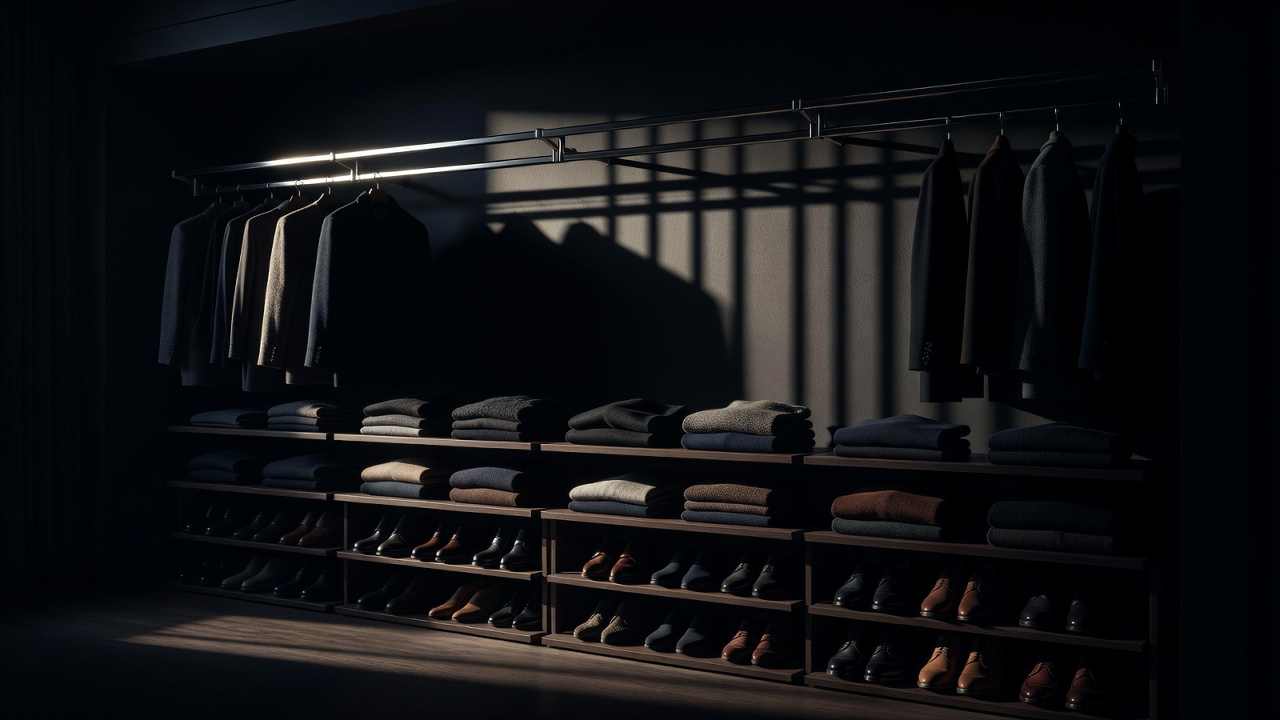
Wardrobe interior in dramatic low light with double hanging rails, folded knitwear on shelves and shoe racks
01

Audit by category and length

Pull everything out and sort it into hanging and folding piles, then split the hanging pile by length. Shirts, jackets and folded trousers need about 100 cm of drop; dresses and long coats need 150–170 cm. Measure the total rail length each group fills when hung at a natural spacing — around 2.5 cm per shirt and 5 cm per coat. These two numbers, linear rail and drop height, define the wardrobe more than any brochure will.

Count shoes in pairs and measure your bulkiest knit. Folded jumpers typically stack well to 25–30 cm high; beyond that, piles collapse when you pull one out.

02

Set rail heights that work for you

A single rail usually sits around 170–180 cm from the floor. Double hanging — the biggest capacity gain in most wardrobes — uses an upper rail near 200–210 cm and a lower rail near 100–105 cm, effectively doubling space for short garments. If the upper rail is out of comfortable reach, a pull-down wardrobe lift brings the rail to shoulder height with a handle.

Keep at least one full-height section for long items. Reserve the top shelf above the rail for luggage, spare bedding and out-of-season boxes — the high zone described in our small-room guide.

Slim, flocked or uniform hangers can free roughly a fifth of the rail compared with mixed bulky plastic hangers.

03

Shelves, drawers and dividers

Adjustable shelves at 30–35 cm spacing suit folded tops; 20 cm suits t-shirts and jeans. Pull-out shelves or drawers with low fronts let you see stacks without unstacking them. Inside drawers, honeycomb or fabric dividers keep socks and underwear upright. The vertical "file fold" associated with Marie Kondo is popular for good reason: it lets you see every item at once instead of only the top of a pile.

Accessories benefit from shallow trays. A 7–10 cm deep drawer with a velvet insert for watches, belts rolled in cells, and a pull-out tie or scarf rack keep small items from vanishing into corners.

04

Modular, fitted or freestanding?

Three broad routes exist. Modular frame systems such as IKEA PAX offer standard carcass widths of 50, 75 and 100 cm with a huge accessory range; they are affordable and reconfigurable but leave gaps at sloping ceilings. Wall-mounted track systems like Elfa, sold through The Container Store, hang shelves and baskets from a top rail — useful in walk-ins and alcoves where carcasses would waste depth. Bespoke fitted wardrobes from a joiner use every centimetre, including awkward eaves, but cost far more and can't follow you when you move.

Freestanding wardrobes remain the simplest option for renters. Pair one with a rail insert, drawer organisers and a shoe rack and you capture much of the benefit of a fitted system.

05

Maintain with a hanger test

Turn all hangers backwards at the start of a season; turn each one the right way after you wear the item. After six months, the backwards hangers show you what to donate. It is a low-effort habit that stops a well-designed wardrobe slowly refilling to overflow.