Stashradarshelfrn.homes
Guide 03 · Kitchen & garage

Kitchen storage systems and garage organization, planned around workflow

14 min read · Updated January 2026

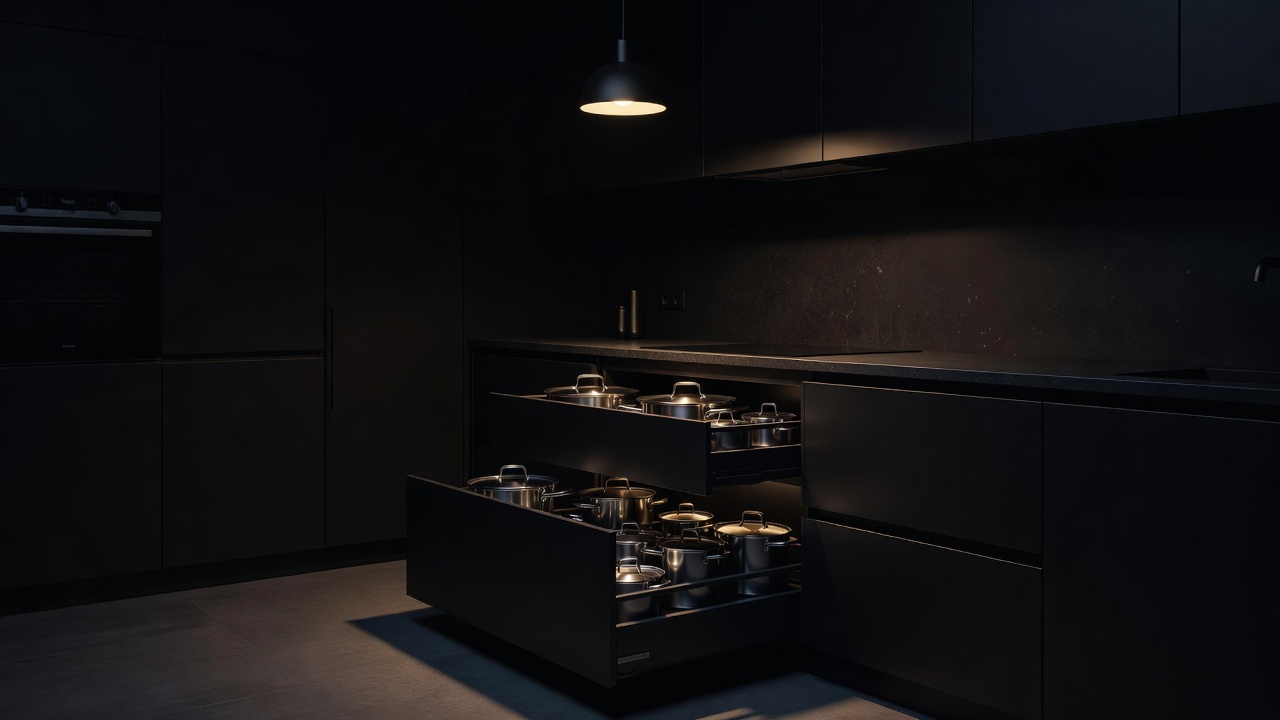
Dark kitchen with deep pan drawers open under a single pendant light, showing neatly stacked pots
01

Think in zones, not cupboards

In 1926 architect Margarete Schütte-Lihotzky designed the Frankfurt Kitchen by timing every movement a cook made, and the logic still holds. Group storage by task: a consumables zone for food, a preparation zone next to the main worktop for knives, boards and bowls, a cooking zone around the hob for pans and utensils, and a cleaning zone by the sink and dishwasher for crockery and bins. The classic "work triangle" between sink, hob and fridge is a good sanity check, but zones matter more in modern kitchens with islands and multiple cooks.
02

Swap low cupboards for deep drawers

Base cupboards force you to kneel and unpack the front row to reach the back. Full-extension deep drawers — the kind made by hardware brands such as Blum and Hettich — bring everything into view from above. Wide pan drawers of 80–100 cm hold stacked pots and lids; a 30 cm drawer can hold upright baking trays with simple dividers.

Corners are the classic dead zone. Options in rough order of usefulness: a corner drawer unit, a "LeMans"-style swing-out, a carousel or Lazy Susan, and finally a blind corner used for rarely needed items.

ItemSuggested storageTypical internal height
Pans & lidsWide deep drawer25–30 cm
Cutlery & utensilsTop drawer with insert7–10 cm
Dry goodsPull-out pantry or tall larderShelves at 25–35 cm
Trays & boardsNarrow vertical slotFull cabinet height
Cleaning productsUnder-sink pull-outAround the trap
03

Pantries, walls and the inside of doors

A 15–30 cm wide pull-out larder beside the fridge holds a surprising amount of tins and jars, all visible from both sides. Decant only what you use often into clear, square containers — square stores more than round in the same footprint. Wall rails with hooks keep ladles and towels off the worktop, and a magnetic knife strip frees a whole drawer. The inside of cupboard doors can carry slim racks for spices or lids if hinge clearance allows.

04

Garage: get everything off the floor

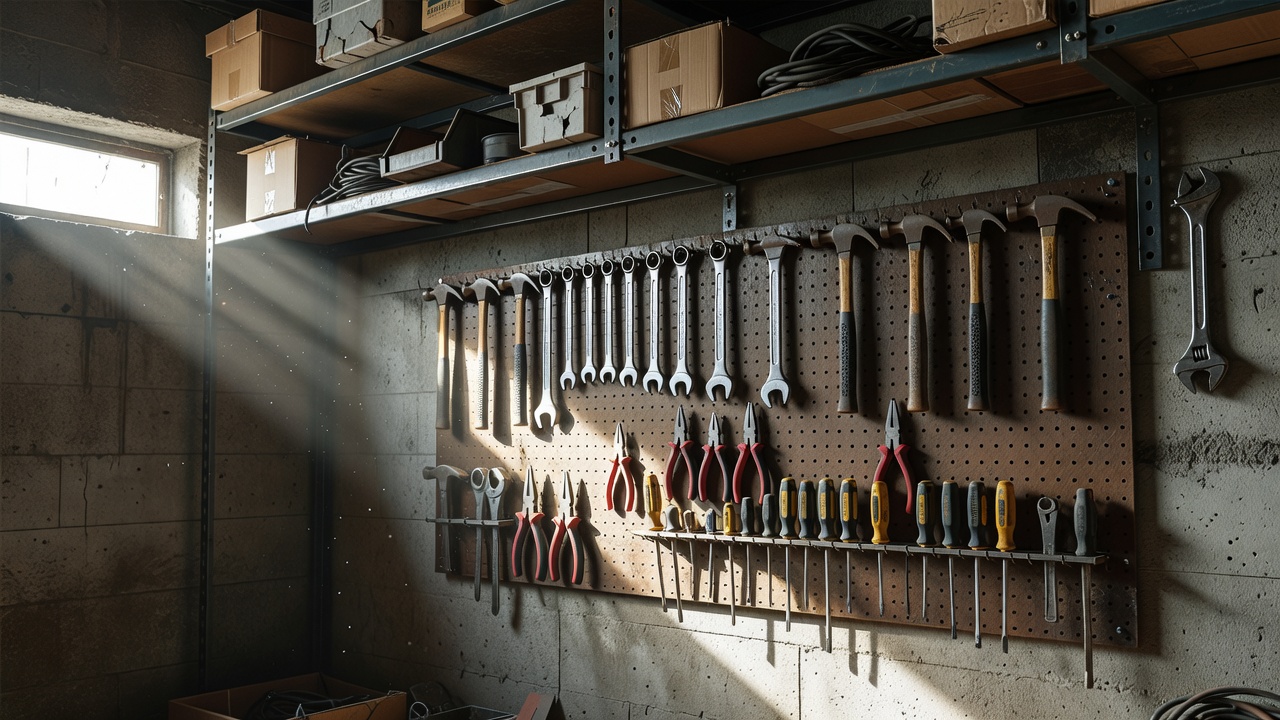
Garage wall with a pegboard of hand tools and overhead storage racks, lit by harsh side light

The garage fails when the floor becomes the shelf. Work in wall zones: a workbench zone with tools on pegboard or slatwall above, a garden zone near the door for long-handled tools in a corner rack, a sports and bikes zone with vertical wall hooks, and a long-term zone in overhead ceiling racks for camping gear and holiday decorations.

Pegboard, sold under the Masonite brand from the 1950s onward, remains cheap and flexible. The French cleat — a wall strip with a 45° bevel that matching holders hook over — is stronger and lets you rearrange tool holders, shelves and cabinets in seconds. Commercial wall systems from brands like Gladiator GarageWorks build on the same idea in steel.

Ceiling racks must be fixed into joists and loaded within the manufacturer's rating. Keep heavy items below shoulder height and store fuels and chemicals in a ventilated, lockable cabinet away from ignition sources.

05

Label and review

Use opaque, labelled bins of a single size so they stack and swap freely. Write contents on two faces. Twice a year — spring and autumn are natural points — pull out every bin, discard what wasn't touched, and rotate seasonal gear forward. For the bigger purge, see our decluttering methods.